

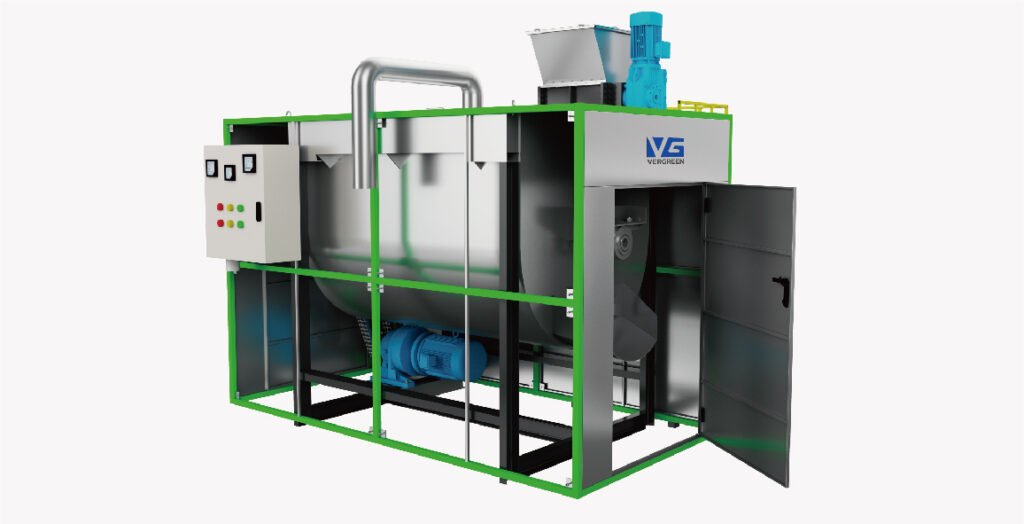
This equipment is equipped with Heze Sanyi’s leading high-temperature negative pressure rendering and drying technology, and strictly complies with the specifications for harmless disposal of dead animals. It achieves high-temperature sterilization and negative pressure pollution prevention to safely and efficiently dispose of dead poultry.
The treated materials feature high saturation of nutritional components, and the output can be recycled as resources. It delivers both environmental and economic benefits, suitable for dead poultry such as chickens, ducks and geese.
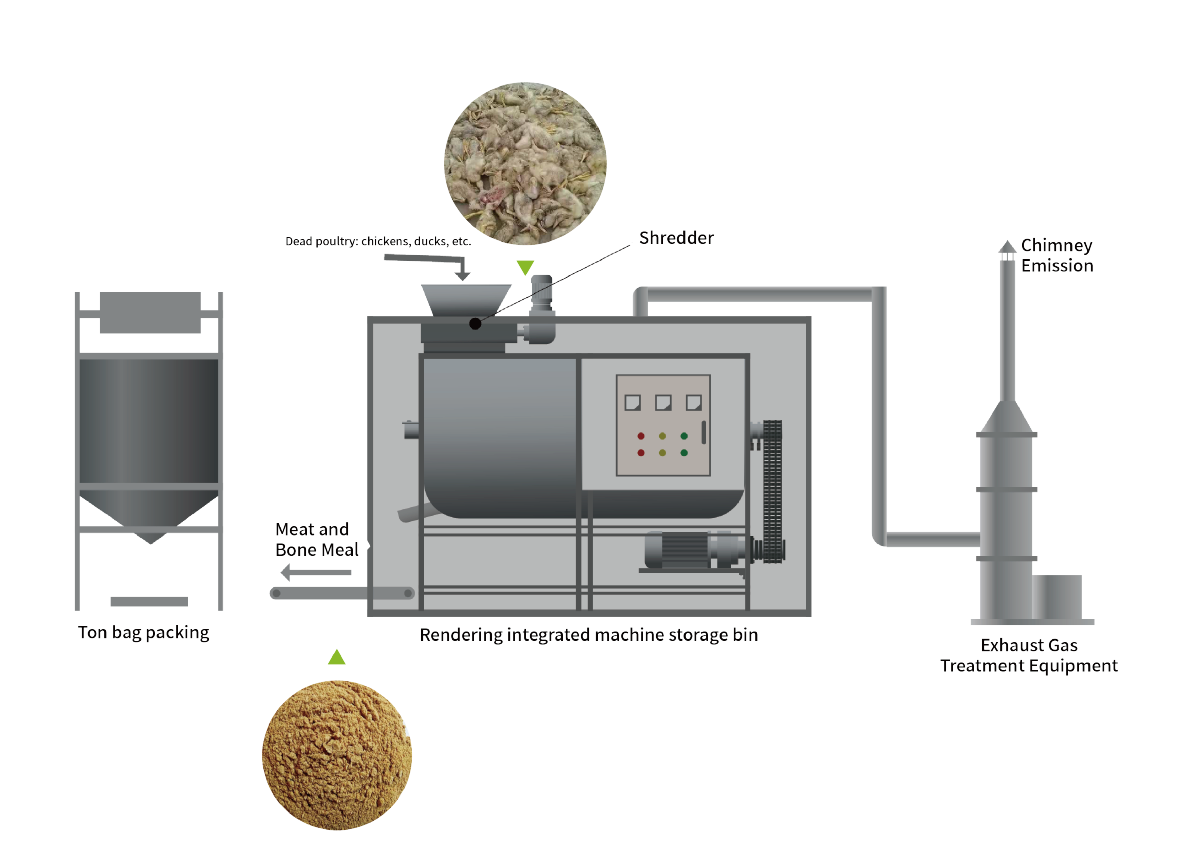
Technological Process
Pretreatment and Crushing
Put the dead poultry carcasses into the shredder. The carcasses are quickly shredded into blocks and automatically fall into the bin of the integrated rendering machine, enabling efficient treatment and high-quality finished products.
High-temperature Rendering Treatment
The temperature of the bin is accurately raised to 130℃ through the PLC intelligent temperature control system, with the stirring shaft operating continuously. The scientifically designed spiral blade teeth keep stirring to ensure even heating of materials. Harmless rendering treatment is realized under the working condition of high temperature and negative pressure.
Negative Pressure Drying Process
A negative pressure environment inside the bin is formed by a vortex vacuum pump. Under the combined effect of negative pressure (≤ -0.06MPa) and high temperature (100-140℃), the materials are dried for 4 to 6 hours. By reducing the ambient air pressure to lower the boiling point of moisture and combining with heat conduction to accelerate evaporation, efficient drying is achieved.